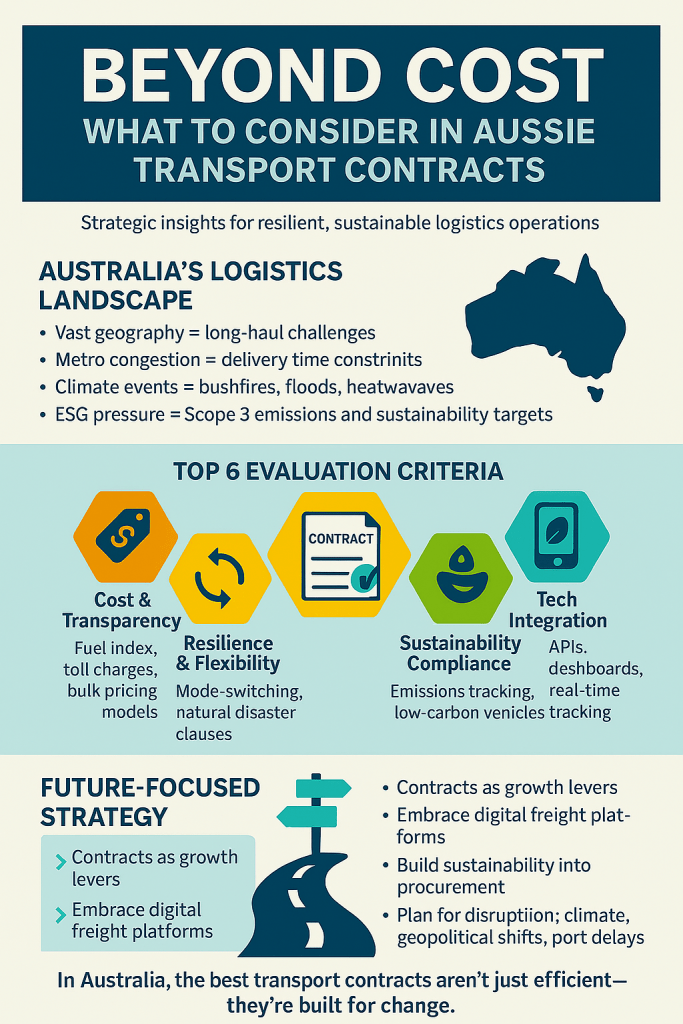
Australia’s logistics industry is the backbone of its domestic economy and international trade, spanning vast rural distances, urban congestion zones, and maritime gateways. Given its unique geography and evolving regulatory landscape, transport contracts require a more nuanced assessment than ever before.
The Australian Context
Operating in Australia means navigating:
- Remote connectivity: Long-haul routes across sparsely populated regions demand robust planning and fleet durability.
- Urban density: Metro hubs like Sydney and Melbourne challenge logistics providers with congestion and delivery time constraints.
- Climate vulnerability: Bushfires, floods, and extreme heat events require adaptive risk clauses in contracts.
- Sustainability mandates: ESG reporting—especially around Scope 3 emissions—is fast becoming a business imperative.
Key Factors When Assessing Transport Contracts
A one-size-fits-all contract won’t cut it in the Aussie supply chain landscape. Instead, businesses should consider:
1. Cost Isn’t Everything
- Examine variable pricing models that reflect fuel index fluctuations and tolling charges
- Consider trade-offs between speed and cost for rural deliveries versus metro areas
2. Resilience and Flexibility
- Contracts should include contingency planning for natural disasters and port backlogs
- Flexible clauses for switching transport modes—especially in intermodal logistics setups
3. Technology Enablement
- Integration with digital freight platforms and API compatibility
- Real-time visibility of cargo across transport nodes, with predictive analytics
4. Sustainability and ESG Alignment
- Commitment to low-emission vehicles or carbon offset programs
- Detailed Scope 3 emissions breakdowns linked to transport activities
5. Workforce and Compliance
- Review provider commitments to fair driver pay and fatigue management
- Ensure alignment with national standards like Chain of Responsibility (CoR) legislation
6. Customer-Centric Service Metrics
- KPIs around on-time delivery, transparency, and dispute resolution responsiveness
- Regular reporting formats that align with your internal audit and procurement needs
Looking Ahead
Australia’s logistics future is being shaped by technology, sustainability, and resilience. Businesses that treat transport contracts as strategic levers—not just operational checkboxes—are best positioned to thrive. Whether it’s a metro courier run or a cross-country freight haul, contracts must reflect the realities of distance, disruption, and digital innovation.
In short, the Australian supply chain is vast—and transport contracts must be just as expansive in vision.
 Conduit Consulting Services
Leave a comment